
More Freedom. Fewer Surprises.
Medicare Supplement insurance works alongside Original Medicare to help cover some of the out-of-pocket costs Medicare leaves behind.
For many people, Medigap offers greater provider flexibility, more predictable healthcare costs, and the freedom to see Medicare-participating providers nationwide.

Medicare Supplement Basics
Medicare Supplement plans, also called Medigap, can help pay some of the out-of-pocket costs left behind by Original Medicare.
Works With Original Medicare
Original Medicare pays first. Your Medicare Supplement plan may then help with certain eligible costs Medicare leaves behind.
Helps Fill the Gaps
Depending on the plan, Medigap can help with deductibles, coinsurance, copayments and other approved Medicare costs.
Standardized Plan Benefits
In most states, Medigap plans use standardized lettered benefits, such as Plan G or Plan N, while premiums vary by insurer.
Separate From Part D
Modern Medicare Supplement plans generally do not include prescription drug coverage, so Part D is usually purchased separately.
Provider Flexibility
With Original Medicare and Medigap, you can generally use any healthcare provider nationwide that accepts Medicare.
Rates Vary by Carrier
The same standardized plan benefits can be offered at different premiums depending on the insurance company and your situation.
The right Medicare Supplement plan depends on your budget, healthcare needs, travel habits and how much cost predictability you want.
COMPARE MEDICARE SUPPLEMENT OPTIONS →Understanding Medicare Supplement Premiums
Medicare Supplement plans have a monthly premium. What you pay can depend on several factors, so comparing both plans and insurance companies matters.
The goal isn't simply to find the lowest premium today. It's to find coverage that offers strong long-term value for your situation.

The right plan today can bring peace of mind for tomorrow.
Other Medicare Options We Help You Explore
Medicare Supplement isn't the only path. Understanding your alternatives can help you make a more confident decision.


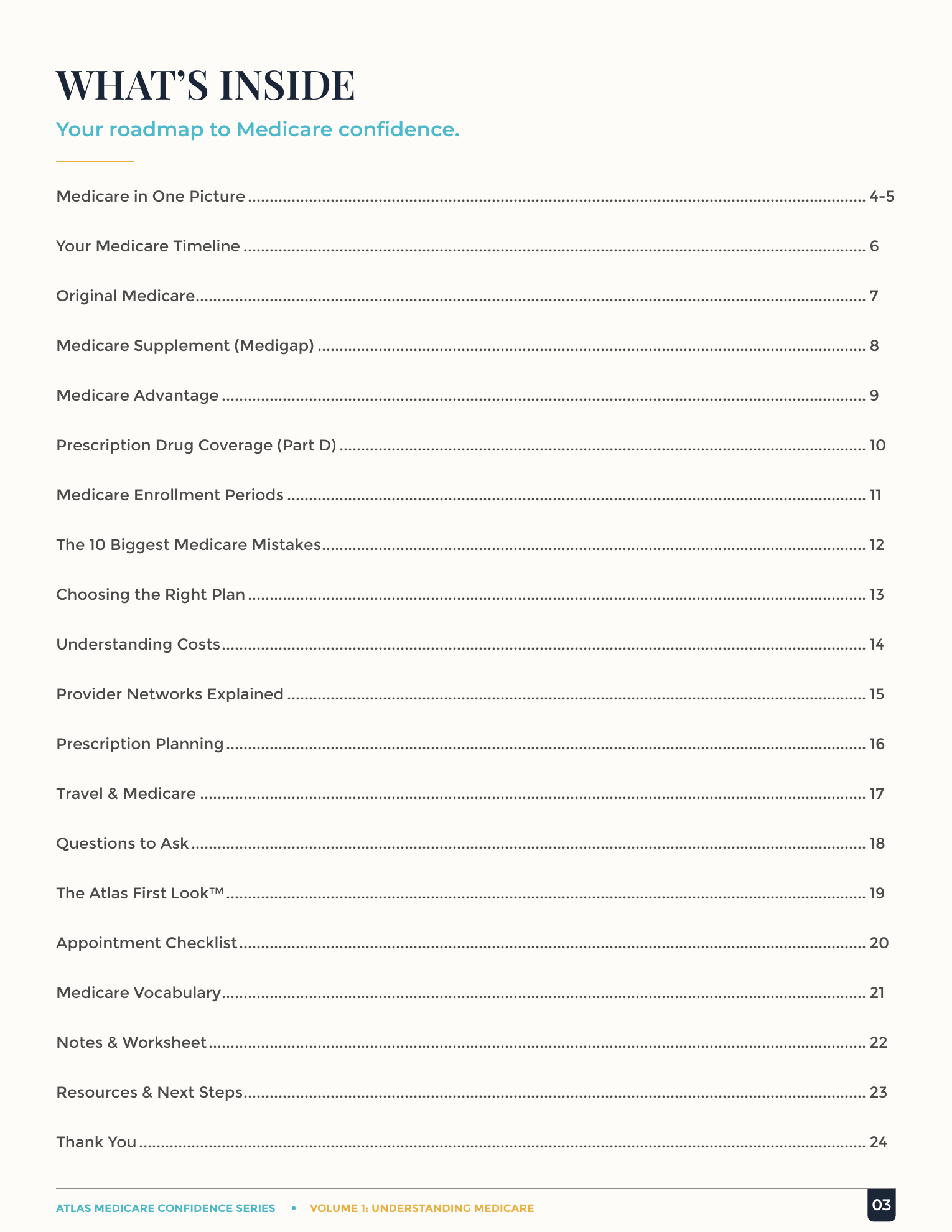

Want the Big Picture?
Medicare Supplements can help with some of the out-of-pocket costs left by Original Medicare. See how Medigap compares with Medicare Advantage and where it fits into the bigger Medicare picture.
Our complimentary Understanding Medicare — 2027 Edition guide walks you through the Medicare essentials in clear, straightforward language.
Let's Find Your Right Fit.
Plans, providers, premiums and long-term costs all matter. We'll help you compare the pieces and understand what may fit your situation.

We may not offer every plan available in your area. Any information we provide is limited to those plans we do offer in your area. Please contact Medicare.gov or 1-800-MEDICARE to get information on all of your options.