
PART A
$1,736
Inpatient Hospital Deductible
The 2026 Part A inpatient hospital deductible applies per benefit period.
Premiums, deductibles, coinsurance, prescriptions and the coverage option you choose can all affect what Medicare costs you throughout the year.
Understanding the full picture can help you compare your options more confidently and plan for healthcare expenses in retirement.

These are several of the major 2026 Original Medicare costs. Your actual total healthcare spending will depend on the services you use and any additional coverage you choose.
The 2026 Part A inpatient hospital deductible applies per benefit period.
Most beneficiaries pay the standard Part B premium, although higher-income beneficiaries may pay more.
The annual Part B deductible generally must be met before Medicare begins sharing the cost of many covered services.
After meeting the Part B deductible, you generally pay 20% of the Medicare-approved amount for many covered services.
Hospital coverage and medical coverage each have their own premiums, deductibles and cost-sharing rules.
After the Part B deductible, Original Medicare generally pays 80% of the Medicare-approved amount for many covered outpatient services, leaving you responsible for the remaining 20%.
The important part is that Original Medicare itself does not have a yearly out-of-pocket maximum. That means your total costs can depend heavily on how much healthcare you use during the year.
Prescription coverage, supplemental coverage and the way you choose to receive Medicare can all affect your monthly and annual healthcare costs.
Standalone prescription drug plans can have their own premiums, deductibles and medication cost sharing.
Medicare Advantage plans may have premiums, copays, coinsurance and a yearly maximum on covered Medicare services.
Medigap policies have a monthly premium but can help cover certain out-of-pocket costs left by Original Medicare.
MSA plans combine a high-deductible Medicare Advantage plan with a plan-funded savings account.
Some people use additional coverage to help manage certain hospital-related out-of-pocket expenses.
The doctors you see, prescriptions you take and services you need can ultimately have the biggest impact on total spending.
Higher-income Medicare beneficiaries may pay an additional amount on top of their Part B and Part D costs. Use the estimator below to see how the 2026 IRMAA rules may apply based on your 2024 income.
IRMAA is an additional Medicare premium amount that may apply to Medicare Part B and Part D based on modified adjusted gross income.
For 2026 Medicare premiums, Social Security generally uses income reported on your 2024 federal tax return.
Retirement or certain other qualifying life-changing events may allow you to request a new IRMAA determination.
Enter your filing status and 2024 modified adjusted gross income to estimate your 2026 Medicare IRMAA.
Enter your filing status and 2024 income, then select Calculate My 2026 IRMAA.
Social Security determines your actual IRMAA using tax information supplied by the IRS. Your Part D plan premium is separate from the Part D IRMAA shown here. Filing status, tax circumstances and qualifying life-changing events may affect your actual Medicare premiums.

A plan can look inexpensive on the surface and still become costly depending on prescriptions, copays, provider use and other out-of-pocket expenses.
That's why we compare more than the monthly premium. We look at how the coverage may actually work based on the healthcare you expect to use.

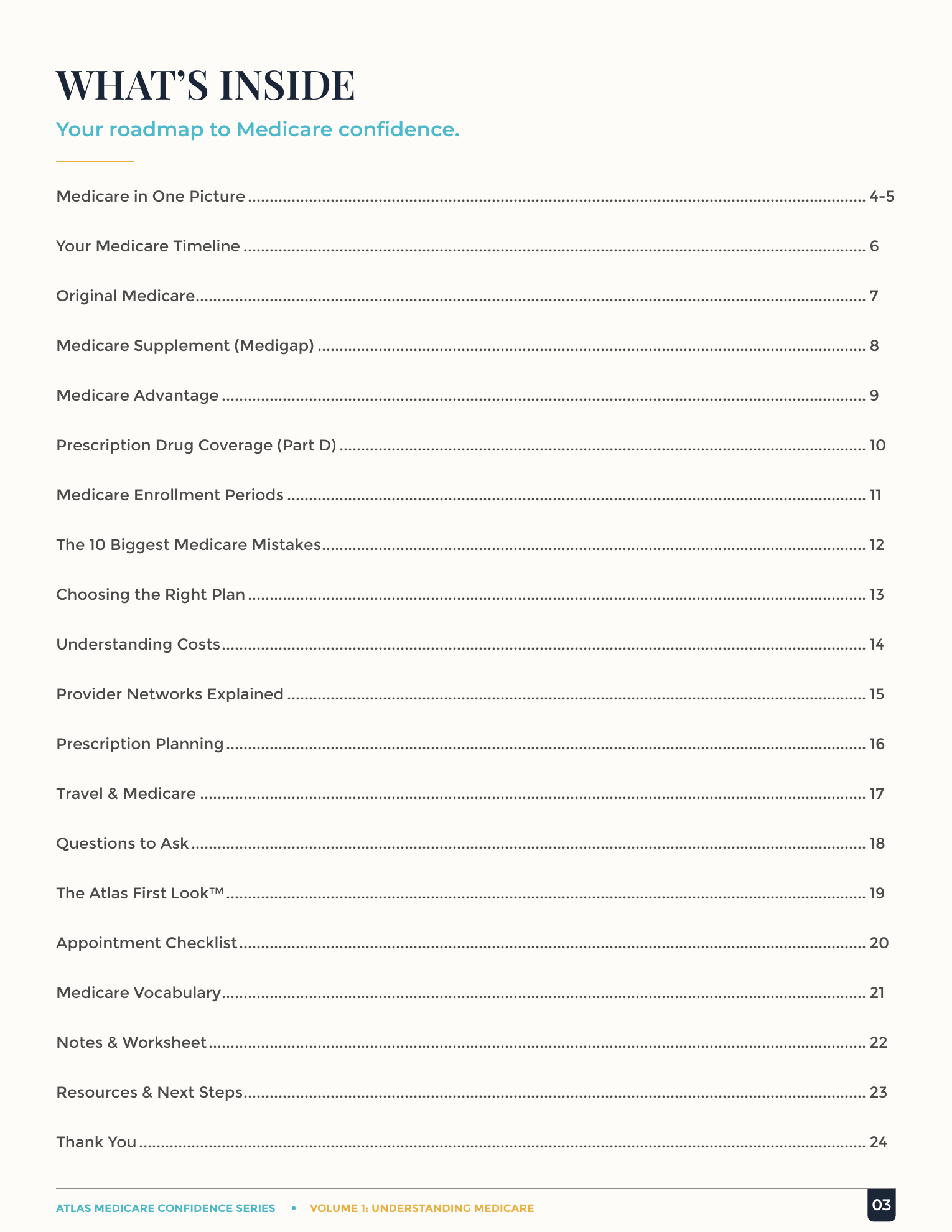
Understanding what Medicare may cost is about more than just the monthly premium. See how premiums, deductibles, copays, coinsurance and other costs fit into the bigger Medicare picture.
Our complimentary Understanding Medicare — 2027 Edition guide walks you through Medicare in clear, straightforward language.
Medicare costs are personal. Your income, medications, healthcare use and coverage choices all affect the final picture.
We'll help you compare the major cost factors so you can understand your options before making a decision.
No cost. No obligation. Just clear Medicare guidance.
We may not offer every plan available in your area. Any information we provide is limited to those plans we do offer in your area. Please contact Medicare.gov or 1-800-MEDICARE to get information on all of your options.